Aikido is a modern Japanese martial art based on the principles of balance, timing, movement and coordination of mind and body. Rather than meeting force with force, an Aikido practitioner learns to move with an attack, redirect it, disrupt the attacker’s balance and bring the situation under control. Aikido includes throws, joint controls, pins, strikes (atemi) and methods of safely receiving techniques and falling (ukemi). Its techniques can be powerful, but the goal is not to overpower an opponent through greater strength. Good Aikido develops the ability to remain calm, balanced and effective under pressure and to accomplish what is necessary with the least unnecessary effort.
There is no competition in Aikido. Training is cooperative: partners alternate between attacking and performing the technique, each helping the other improve. This allows students to study increasingly realistic attacks while developing control, awareness and responsibility for their training partners.
The word Aikido (合気道) is commonly translated as “the way of harmonizing energy” or “the way of harmony with ki.” At its heart is the idea that conflict does not always have to be met by direct opposition. Through training we learn to remain centered, respond appropriately and redirect conflict rather than simply collide with it.
Aikido can be practiced by people of very different ages, sizes and levels of physical ability. Because effective technique depends more on posture, timing, relaxation and coordination than on muscular strength, students can continue to develop throughout a lifetime of practice.
Kokikai Aikido
Quiet Storm Dojo practices Kokikai Aikido (光気会), the system developed by Shuji Maruyama Sensei. Kokikai emphasizes natural movement, relaxation, correct posture and coordination of mind and body. Its guiding principle is Minimum Effort, Maximum Effect. Rather than relying on muscular tension or forcing a technique to work, Kokikai students seek the most natural and efficient way to move. Training is built around four basic principles:
Keep One Point — maintain a calm, stable center • Relax Progressively — release unnecessary physical and mental tension • Correct Posture — maintain a strong, natural posture • Positive Mind — approach action with confidence and positive intention
These principles are tested through actual martial technique. Kokikai does not treat the development of ki as an abstract idea; students learn through physical experience how changes in posture, relaxation, state of mind and coordination can make a technique either weaker or stronger. The larger goal is to discover a stronger and more dependable state of being that can be carried beyond the dojo into everyday life. This emphasis on effective self-defense together with personal development is central to Maruyama Sensei’s teaching.
Shuji Maruyama Sensei
Shuji Maruyama Sensei was born in Japan in 1937 and studied Aikido directly under its founder, Morihei Ueshiba, later becoming a senior instructor at Aikikai Hombu Dojo. He came to the United States in 1972 to teach Aikido and, after years of teaching and refining his approach, established Kokikai Aikido in 1986. Maruyama Sensei’s approach places particular importance on discovering each individual’s strongest natural state rather than simply copying an outward form. Kokikai technique therefore continues to develop and be refined, while remaining grounded in the principles of relaxation, correct posture, positive mind and effective self-defense.
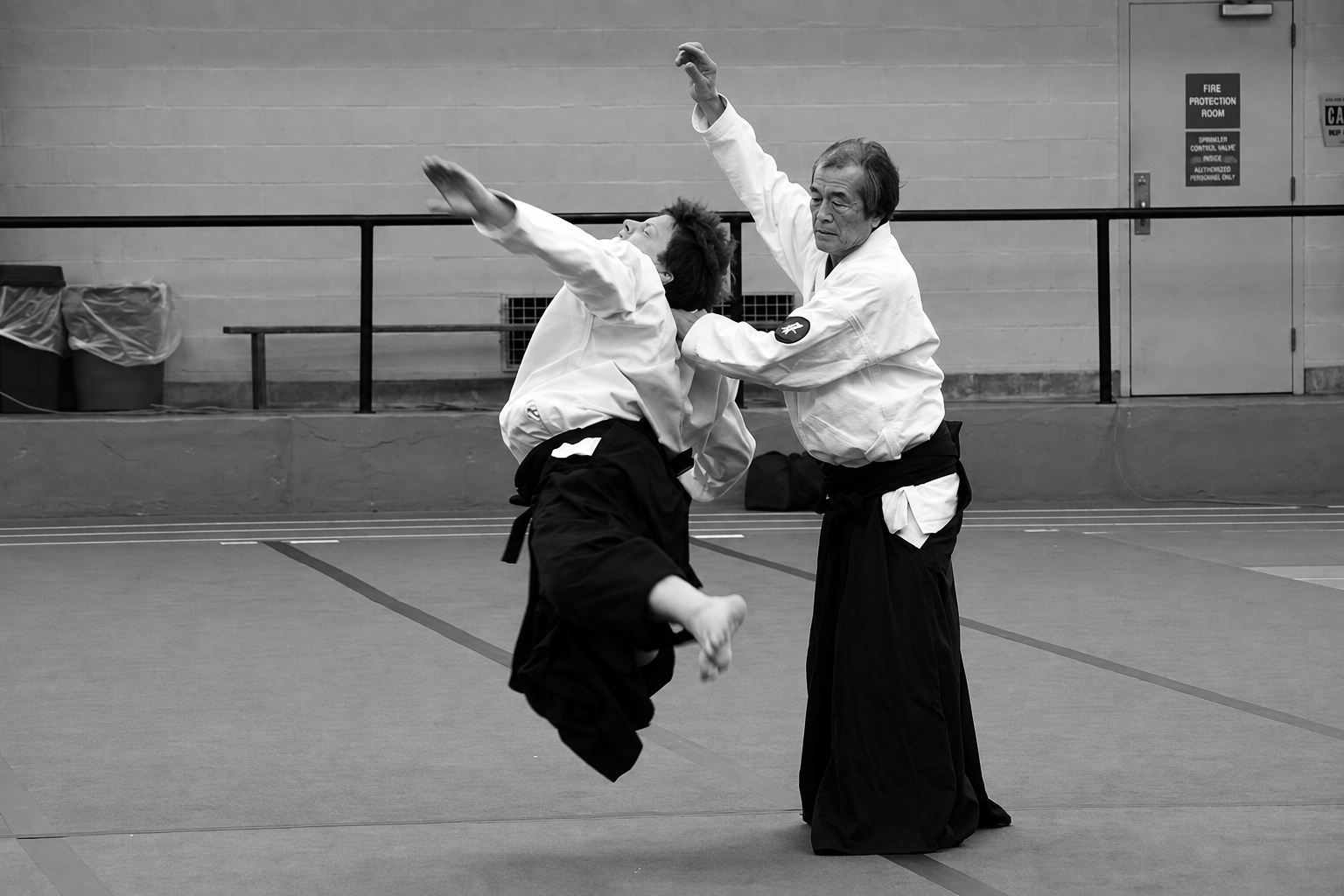
Sensei Berry (8th Dan)
Rick Berry started down the martial arts path in 1963 when his brother-in-law gave him several copies of Black belt Magazine to read. Military service delayed his enrollment but in 1965 he joined the Seibukan Shorin-Ryu Karate school in Norwood, Pennsylvania. The chief instructor’s name was Walter Daily who was a student of Grandmaster Zenpo Shimabukuro of Okinawa. After 8 months Mr. Berry switched to the Korean art called “Tae Soo Do,” which later became Tae Kwon Do, a catchall title in Korean. The actual system he studied is Ji Do Kwan, the Grandmaster of which is Chong Woo Lee of South Korea. The late Master C. K. Kim headed the Ji Do Kwan system in the United States. Sensei Berry’s immediate instructor in Chester was Steven McKnight who turned his YMCA school over to Mr. Berry in 1969. Master Kim, a resident of New York City, traveled to Chester several times per year to instruct and conduct belt examinations. Sensei Berry received his black belt in 1969.
One year later several community leaders called on Mr. Berry suggesting that he open a club in the West End of Chester. They wanted Tae Kwon Do for those who could not afford YMCA memberships. He opened a branch at the T.M.T. Community Center later that year, charging the students $10 per month. The “House of the Quiet Storm” was born. Mr. Berry has taught over 2,000 students as a Tae Kwon Do instructor, and has promoted 22 black belt students.
In 1983, Mr. Berry began his study of Aikido in Philadelphia, traveling to that city several times per week, and achieved 1st degree black belt rank in 1990. Since that time he has taught many students, including doctors, lawyers, schoolteachers, college professors, commercial airline pilots, correctional officers and state and local police officers.
Berry Sensei holds black belts in three different arts: 2nd dan (2nd degree black belt) Ji do Kwan/ Tae Kwan Do, 8th dan (8th degree black belt) in Aikido Kokikai ryu and 7th dan in Dr. Moses Powell’s system of Ju Jitsu. He is the founder of The Quiet Storm System and Aikido Kokikai Delaware. In 1977 Rick Berry, S. L. Martin of New Jersey, and Pat Byrnes of Pennsylvania founded The United Martial Arts Referees Association.
In August of 2004 Sensei Berry published his first book entitled “Stepping off the Mat.” It describes how to apply martial arts principles in everyday life. A revised edition of “Stepping Off The Mat” was published in 2011.
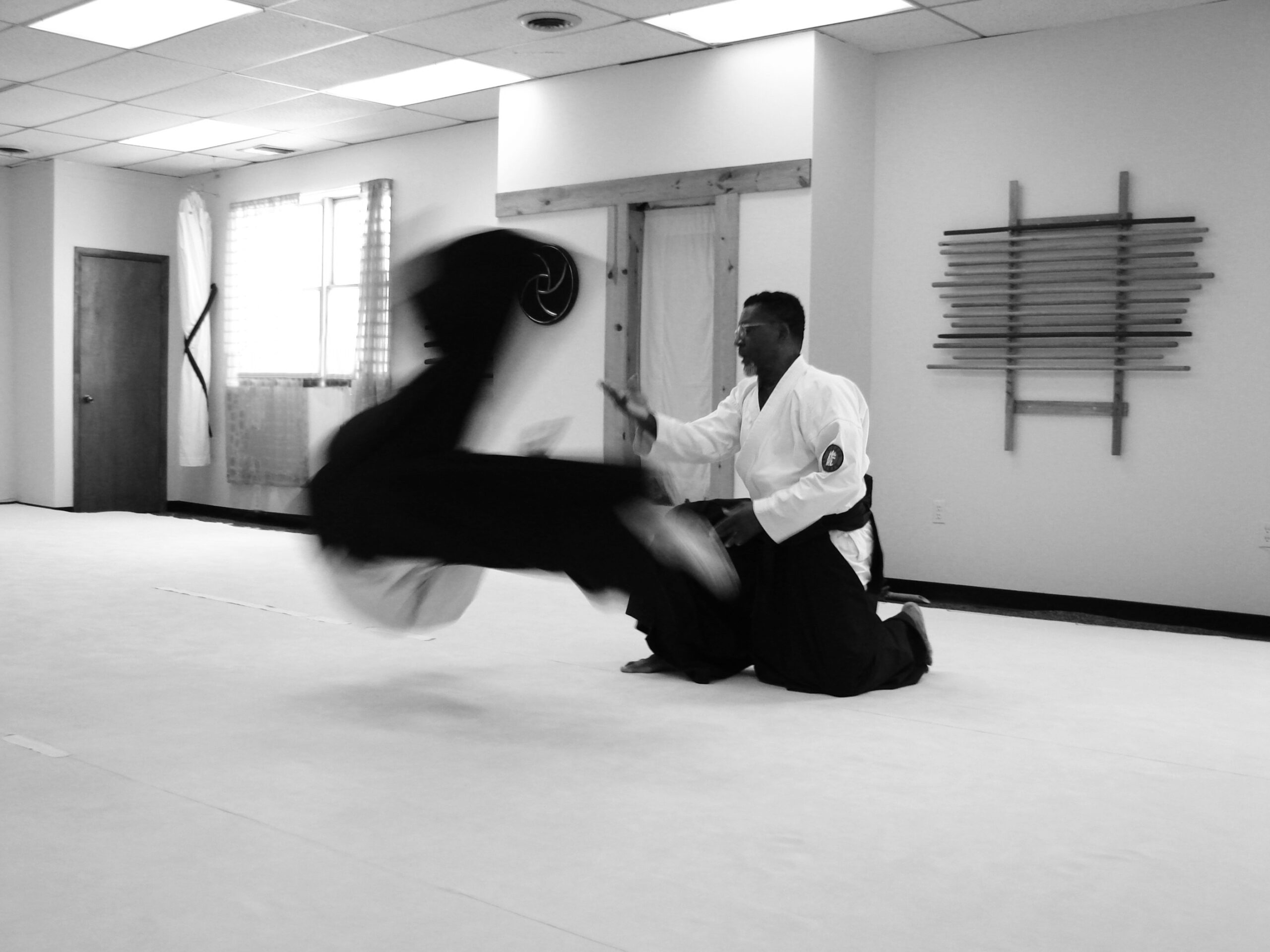
Additional Instructors
- Andrew Furst (6th dan)
- Andrew started aikido in 1991 and is the senior student and Director of Promotions. He is attracted to aikido for not only its grace and power, but also for its spiritual nature. Andrew currently teaches the Monday night regular class. His teaching skills, however, extend beyond the dojo, as he is an elementary school teacher. He finds that his training in aikido helps his classroom presence where he finds the principles of redirection and blending useful in classroom management.
Connect With Us
Follow us on Facebook
Join Us!
All Aikido classes are ongoing at our dojo. New students may join at any time. All new students are asked to join under a trial membership that allows the student to experience the many benefits Aikido has to offer, without the obligation of joining as a full-time student. Our trial membership covers two months of classes and includes a training uniform.
Since most new students have never seen Aikido in person, we suggest you contact us to arrange a visit to our dojo. Please text (302) 757-1057 or email quietstormaikido@gmail.com to sign up!